Meeting automation

LaserGuide Zoom Integration Guide

This guide explains how LaserGuide connects to Zoom, what customers authorize, how Zoom meetings are created and managed, how multiple accounts work, and how to troubleshoot common connection or meeting issues.

Zoom Integration Zoom OAuth Connect Zoom Create Zoom Meetings AI Meeting Scheduling Zoom CRM Integration
What this section covers
  • Native sender setup with SMTP and optional IMAP
  • Campaign build, sequence, and sender-pool operations
  • Lead enrollment, queue states, and send logs
  • Calendly, Zoom, deliverability, and AI reply workflow
  • Agency brand-account management and credits or billing controls
Introduction

What this guide covers

The LaserGuide Zoom integration connects Zoom meeting creation and meeting management to the LaserGuide conversation workflow. It is designed for teams that use LaserGuide to manage sales conversations, customer follow-up, recruiting outreach, founder-led meetings, or operations workflows where a positive reply should turn into a scheduled conversation.

Customer outcome

After Zoom is connected, LaserGuide can prepare a meeting, create a Zoom meeting link, store the meeting details, and use those details during confirmation and follow-up workflows. This reduces manual copying between Zoom, email, calendars, CRMs, and internal notes.

Reviewer outcome

A Zoom Marketplace reviewer can use this page to understand the customer workflow, the permissions requested during authorization, the data LaserGuide stores, and the limits of what the integration does and does not access.

Important

LaserGuide never asks for, receives, or stores a customer's Zoom password. Authentication happens on Zoom's official website through Zoom OAuth, and customers can disconnect their Zoom account at any time.

Integration basics

What is the Zoom Integration?

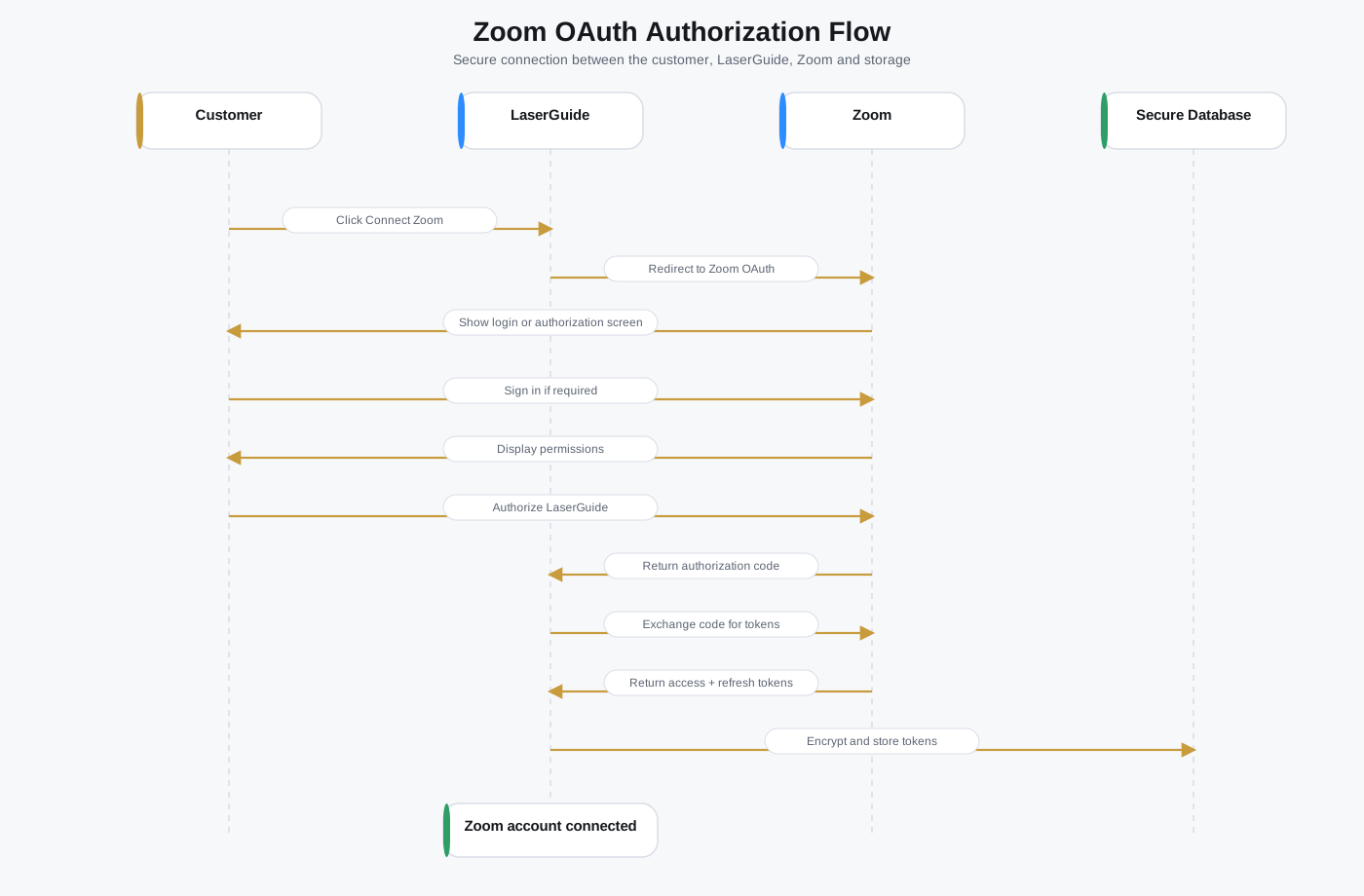
The Zoom Integration is the connection between a customer's LaserGuide workspace and one or more Zoom accounts. When a user connects Zoom, LaserGuide sends the user to Zoom's authorization screen. Zoom verifies the user's identity, shows the permissions being requested, and asks the user to approve the connection. After the user approves, Zoom sends LaserGuide an authorization response that allows LaserGuide to create and manage meetings for the connected Zoom account.

This connection uses Zoom OAuth. OAuth is an authorization method that allows a user to grant access to an application without sharing their password with that application. In practical terms, this means LaserGuide can perform specific meeting actions that the user approves, while Zoom continues to control login, password handling, multi-factor authentication, and the final permission approval screen.

Authentication location
Users sign in on Zoom's official website, not inside LaserGuide. If a user is already signed in to Zoom, Zoom may take the user directly to the authorization screen.
Password handling
LaserGuide does not request Zoom passwords, cannot view Zoom passwords, and does not store Zoom passwords.
Authorization scope
LaserGuide requests only the meeting and account identification access needed to identify the account and manage meetings used by LaserGuide workflows.

Official reference: Zoom OAuth documentation.

Benefits

Benefits of connecting Zoom

Teams connect Zoom to remove repetitive meeting work from the conversation process. Without the integration, a user may need to read a positive reply, open Zoom, create a meeting, copy the join URL, paste it into a reply, update the CRM, and keep track of whether the meeting changes later. LaserGuide brings those steps into one managed workflow.

Automatic meeting creation

LaserGuide can create Zoom meetings when a qualified conversation reaches the meeting stage.

AI-assisted scheduling

LaserGuide can use reply intent and meeting context to prepare the correct scheduling path.

Faster follow-up

Teams can respond with meeting details without manually building every Zoom invite.

Central management

Meeting IDs, join URLs, titles, timing, and related metadata are stored with the LaserGuide workflow.

Reduced manual work

Users spend less time copying links and reconciling meeting details across tools.

Cleaner CRM sync

Meeting records can support more accurate sales, recruiting, or customer-success reporting.

Prerequisites

What you need before connecting

Before connecting Zoom, confirm that the user who will authorize the connection has access to both LaserGuide and Zoom. The user should be able to sign in to LaserGuide, reach the settings area, sign in to Zoom, and approve third-party app authorization for the Zoom account they want to use.

Required

  • Active LaserGuide account.
  • Active Zoom account.
  • Stable internet connection.
  • Permission to authorize apps for the selected Zoom account.

Optional companion integrations

  • Google Calendar, when scheduling availability and calendar visibility are managed in Google Workspace.
  • Microsoft Outlook, when the team works from Microsoft 365 calendars.
  • Calendly, when routing or booking pages are part of the customer scheduling process.

Zoom account and product support reference: Zoom Support.

Workflow

How LaserGuide uses Zoom

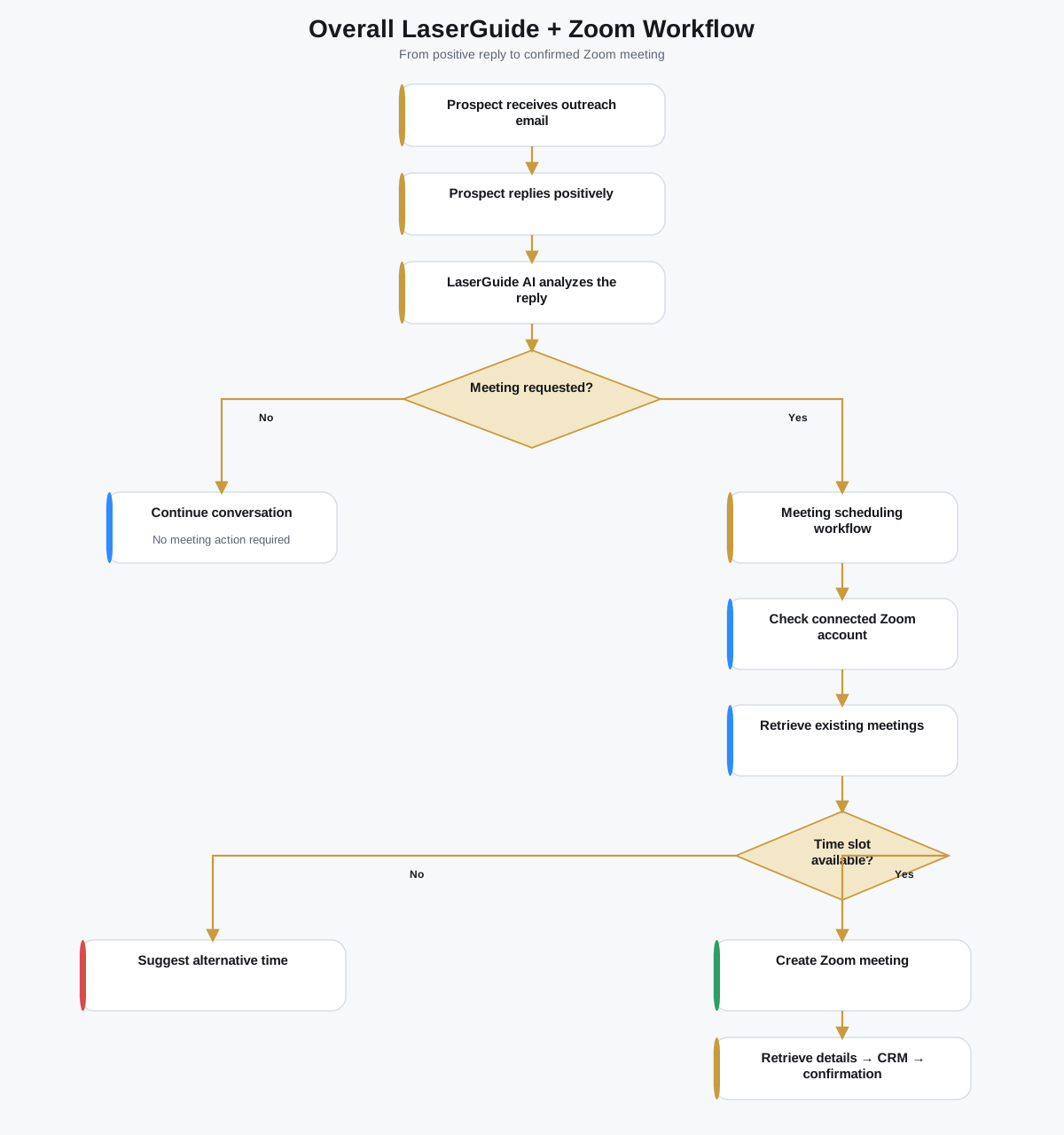
Zoom is used when the conversation workflow needs a real meeting link. The exact trigger can vary by workspace configuration, but the customer-facing sequence is consistent: LaserGuide identifies that a meeting should happen, prepares meeting details, creates the Zoom meeting through the connected account, stores the result, and makes the meeting available for confirmation and management.

Overall LaserGuide and Zoom workflow from prospect reply to managed Zoom meeting
Overall LaserGuide Zoom workflow from qualified reply to meeting management.
  1. Prospect replies positively

    A recipient responds with language that indicates interest in a meeting, demo, interview, consultation, or follow-up conversation.

  2. AI qualifies meeting intent

    LaserGuide evaluates the reply and decides whether the conversation should move toward scheduling, needs a human review, or should receive a different response.

  3. LaserGuide prepares meeting details

    The system prepares the title, timing, duration, participants, and account context needed to create a meeting.

  4. Zoom meeting is created

    LaserGuide calls Zoom using the connected Zoom account and creates the meeting according to the prepared details.

  5. Meeting link is stored

    LaserGuide stores the meeting ID, join URL, title, scheduled time, duration, and related metadata needed for follow-up and auditability.

  6. Confirmation is sent

    The meeting link can be included in a confirmation message, CRM note, or internal workflow step depending on the customer's configuration.

  7. Meeting is managed from LaserGuide

    Users can use LaserGuide to keep the meeting record aligned when a meeting is updated, canceled, or reconnected after authorization changes.

Connection steps

Connecting your Zoom account

The connection process is designed for business users. You do not need to generate API keys, copy secrets, or configure developer settings. You only need to sign in to LaserGuide, name the Zoom account for internal use, and approve the Zoom authorization screen.

  1. Log in to LaserGuide

    Open LaserGuide and sign in with your workspace account. [SCREENSHOT - Login]

  2. Open Settings, then Zoom Accounts

    From the workspace navigation, open Settings and select Zoom Accounts. This is where connected Zoom accounts are listed and managed. [SCREENSHOT - Zoom Accounts]

  3. Enter a Zoom account name

    The account name is only used inside LaserGuide. It helps your team distinguish multiple Zoom accounts. Examples include Sales Team, Support Team, Marketing, Recruitment, or John Smith. [SCREENSHOT - Account Name]

  4. Click Connect Zoom

    LaserGuide opens the Zoom authorization flow. [SCREENSHOT - Connect Zoom]

  5. Sign in to Zoom when prompted

    If you are already signed in to Zoom, Zoom may show the authorization screen directly. If not, Zoom will ask you to log in first, then continue to the authorization screen. [SCREENSHOT - Zoom Login]

  6. Review and approve access

    Read the permissions shown by Zoom. If the account and permissions are correct, approve the connection. [SCREENSHOT - Zoom Authorization]

  7. Return to LaserGuide

    After authorization, Zoom redirects you back to LaserGuide. The connected Zoom account appears in the Zoom Accounts list. [SCREENSHOT - Connected Account]

Important

LaserGuide is currently awaiting Zoom Marketplace approval. During the review period, only Zoom accounts belonging to the authorized development organization can complete OAuth successfully. Other Zoom accounts may receive an authorization error until the application is approved by Zoom Marketplace.

Zoom OAuth authorization flow between LaserGuide, Zoom login, consent, and connected account storage
Zoom OAuth authorization flow used when a customer connects Zoom to LaserGuide.
Authorization

Understanding the Zoom authorization screen

The Zoom authorization screen explains what LaserGuide is asking permission to do. The labels on Zoom's screen may use Zoom's own wording, but the practical meaning is straightforward. LaserGuide requests access needed to identify the connected account and manage meetings for workflows initiated from LaserGuide.

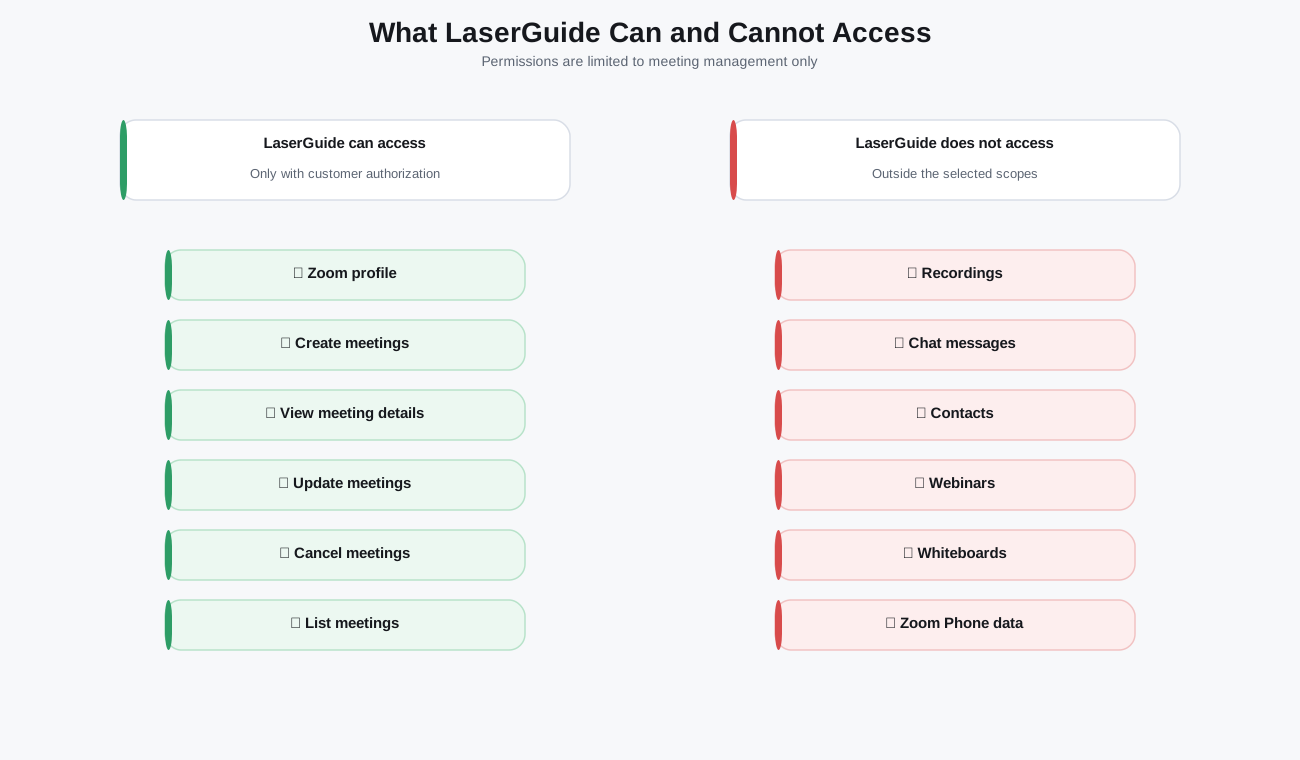
Permission LaserGuide requestsWhy it is required
Identify your Zoom accountLaserGuide needs to know which Zoom account was connected so it can display the account in Settings, distinguish it from other connected accounts, and use the correct account for meeting creation.
Create meetingsLaserGuide needs to create Zoom meetings when a conversation reaches the scheduling stage or when a user manually creates a meeting from the workflow.
View meetingsLaserGuide needs to confirm meeting details, display meeting metadata, and keep the LaserGuide record aligned with the Zoom meeting.
Update meetingsLaserGuide needs to reschedule meetings, change duration, edit titles, or update participant-related details when the workflow changes.
Cancel meetingsLaserGuide needs to cancel or delete a Zoom meeting when the customer cancels it from LaserGuide or when the workflow requires removal.

Official reference: Zoom OAuth permissions documentation.

Data access boundaries for LaserGuide Zoom permissions and excluded Zoom data
Zoom data access boundaries for the current LaserGuide integration.
After authorization

What LaserGuide stores and does not access

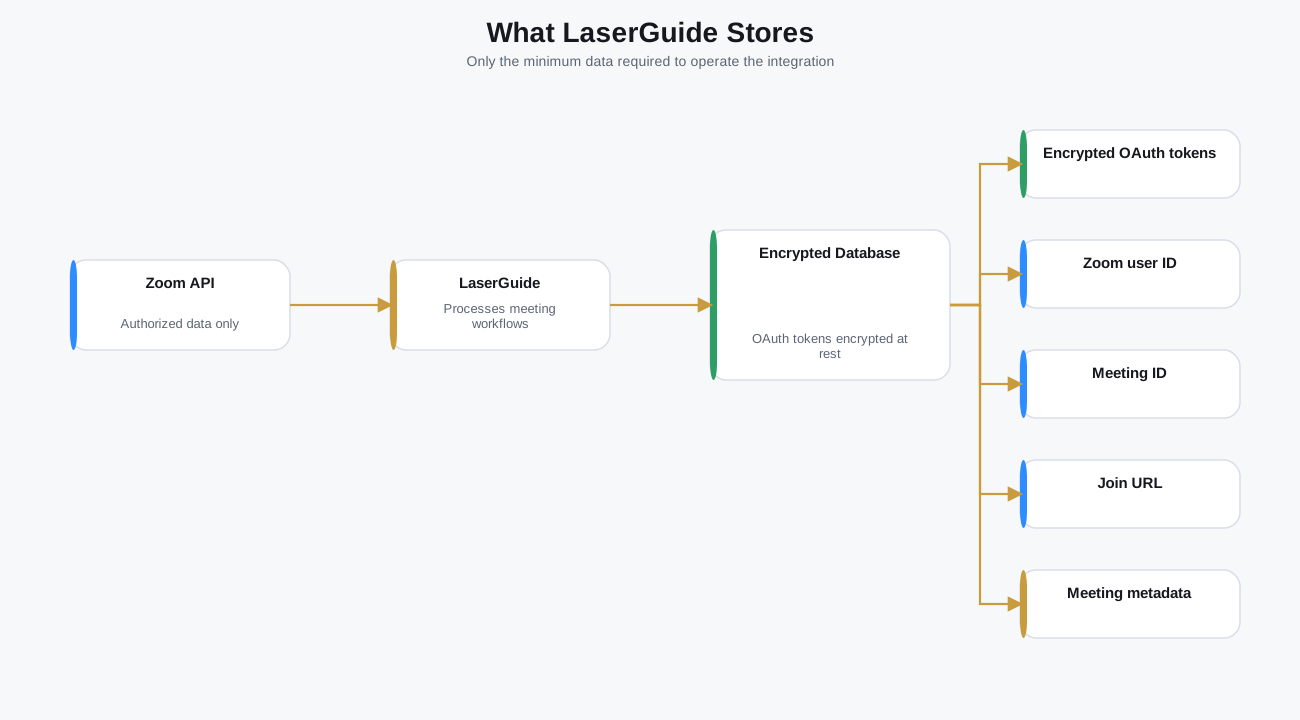
After Zoom authorizes the connection, LaserGuide stores the connected account record and the meeting data needed to operate the workflow. This allows LaserGuide to show which account is connected, create meetings through that account, and keep meeting records available for follow-up, reporting, and troubleshooting.

LaserGuide stores

  • Connected Zoom account reference.
  • OAuth credentials, encrypted before storage.
  • Meeting IDs created or managed through LaserGuide.
  • Meeting metadata such as title, time, duration, and status.
  • Join URL needed for meeting confirmation and follow-up.

LaserGuide does not access

  • Zoom passwords.
  • Meeting recordings.
  • Chat messages.
  • Zoom contacts.
  • Webinars.
  • Cloud recordings.
Security

If LaserGuide supports additional Zoom capabilities in a future version, the product documentation and authorization requirements will be updated to explain those capabilities before customers use them.

LaserGuide Zoom data storage overview for connected account, credentials, meeting metadata, and join URL
Data stored by LaserGuide after Zoom authorization.
Meeting actions

Creating, updating, and canceling meetings

LaserGuide supports both automated and user-driven meeting actions. Automated actions are useful when the conversation workflow has enough information to prepare a meeting without manual copying. Manual actions are useful when a user wants to control the timing, title, account selection, or participant details before the meeting is created.

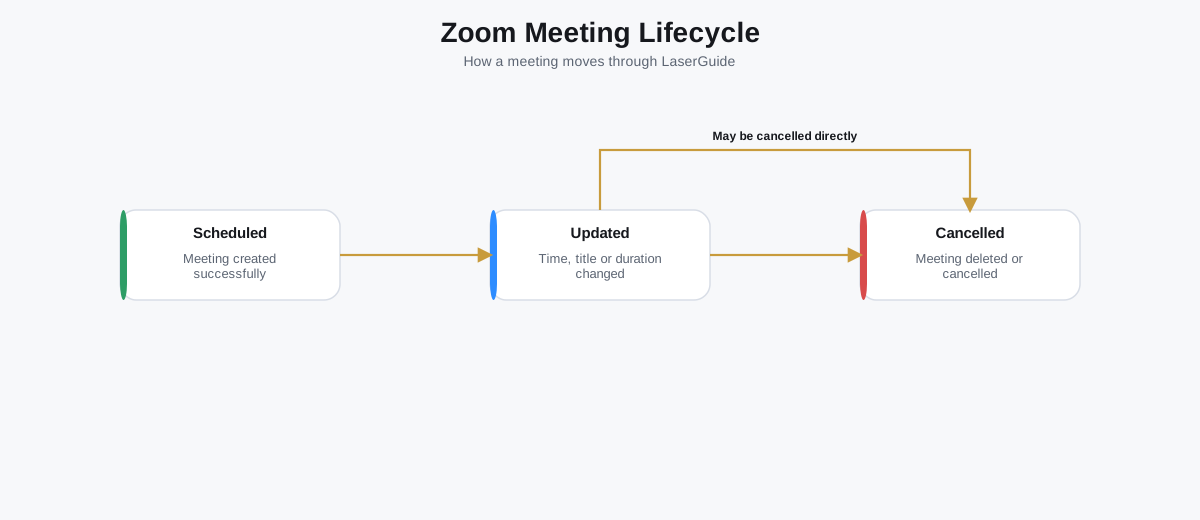
Creating meetings

Meetings can be created automatically from qualified conversation intent or manually from a user action. The expected outcome is a Zoom meeting ID and join URL stored in LaserGuide and available for confirmation.

Updating meetings

Users can reschedule, change duration, update the meeting title, and adjust participant-related information when the workflow supports those changes.

Canceling meetings

Canceling a meeting removes or cancels the Zoom meeting through the connected account and updates the LaserGuide meeting record so users can see that the meeting is no longer active.

Zoom meeting lifecycle showing create, update, cancel, and LaserGuide status storage
Meeting lifecycle actions available from LaserGuide after Zoom is connected.
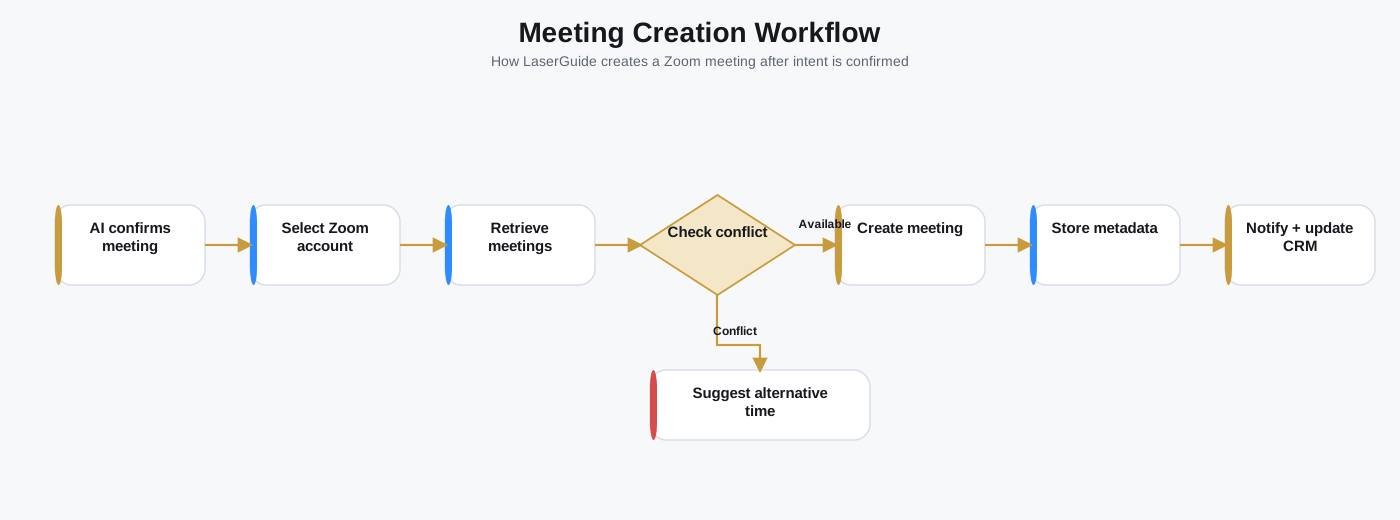
Meeting creation workflow from LaserGuide meeting context to Zoom meeting link storage
Meeting creation workflow from scheduling context to stored Zoom join link.

When a meeting is canceled, attendee behavior depends on the meeting and calendar context. LaserGuide updates its internal status and uses Zoom's meeting cancellation behavior for the Zoom meeting itself. If another calendar or scheduling product is involved, that product may also send its own notifications according to its configuration.

Multiple accounts

Managing multiple Zoom accounts

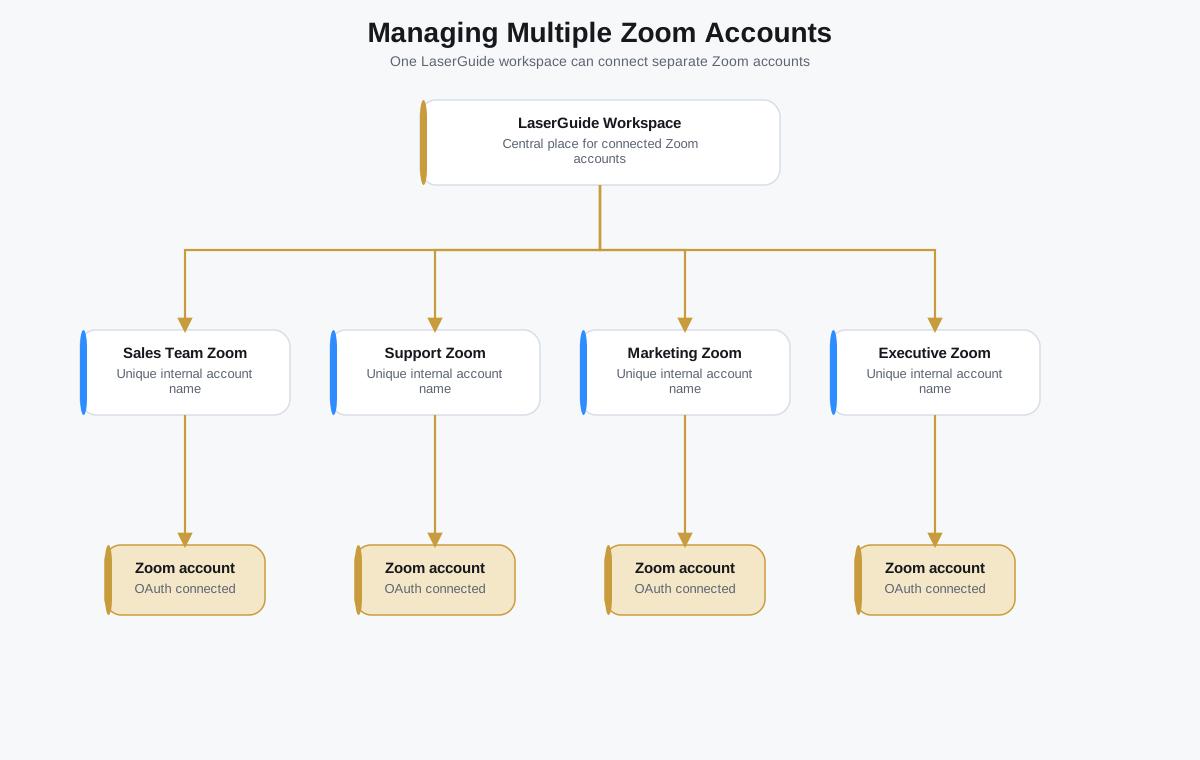
A single LaserGuide workspace can use multiple Zoom accounts. This is useful for agencies, sales teams, support teams, recruiting teams, or companies where different departments host different types of meetings. For example, Sales Team may host demos, Support Team may host onboarding calls, and Recruitment may host interview calls.

  1. Add each account separately

    Open Settings, go to Zoom Accounts, enter a descriptive account name, and connect the Zoom account through the Zoom OAuth flow. [SCREENSHOT - Add Another Zoom Account]

  2. Use descriptive names

    Use names that explain ownership or purpose. Good examples are Sales - US, Customer Success, Recruiting, Partner Team, or Priya Demo Account.

  3. Select the correct account in workflows

    When a campaign or workflow supports Zoom account selection, choose the account that should host the meeting.

  4. Set or maintain defaults when supported

    If a default Zoom account is available in your workspace, use it for the team account most commonly used for meetings.

Best Practice

Use one Zoom account per team or meeting owner when reporting, ownership, and customer experience matter. Avoid generic names such as Account 1 or My Zoom because they make troubleshooting harder.

Multiple Zoom accounts connected to one LaserGuide workspace for different teams and workflows
Multiple Zoom account model for team-based meeting ownership.
Account lifecycle

Removing or reconnecting a Zoom account

Customers remain in control of their Zoom connection. If a team changes ownership, rotates accounts, revokes permissions, or no longer wants LaserGuide to create Zoom meetings, the account can be removed. If authorization expires or is revoked by Zoom, the account can be reconnected.

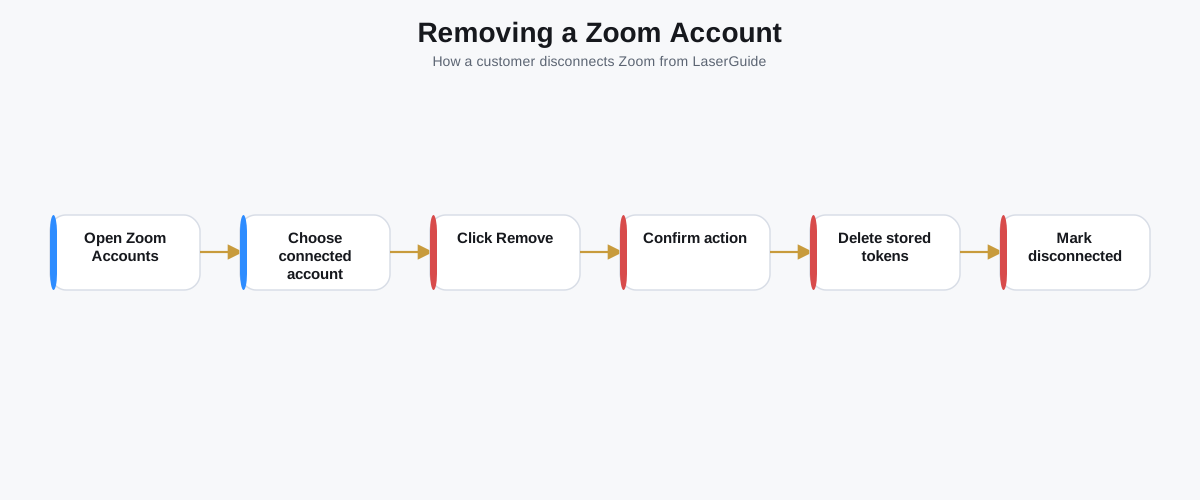
Remove an account

  1. Open Settings.
  2. Select Zoom Accounts.
  3. Choose the account to remove.
  4. Click Remove.
  5. Confirm the removal. [SCREENSHOT - Remove Zoom Account]

Removal disconnects the account for future LaserGuide actions. Historical LaserGuide records may remain for audit, reporting, and support context. Existing Zoom meetings may still exist in Zoom unless they are separately canceled.

Reconnect an account

  1. Open Settings.
  2. Select Zoom Accounts.
  3. Choose the account that needs attention.
  4. Click Reconnect or connect the account again.
  5. Complete Zoom authorization. [SCREENSHOT - Reconnect Zoom]

Reconnect when authorization expires, the Zoom password changed, an admin revoked permission, or meeting actions begin failing because LaserGuide can no longer use the stored authorization.

Remove Zoom account workflow showing settings, remove action, confirmation, and disconnected state
Zoom account removal flow and resulting disconnected state.
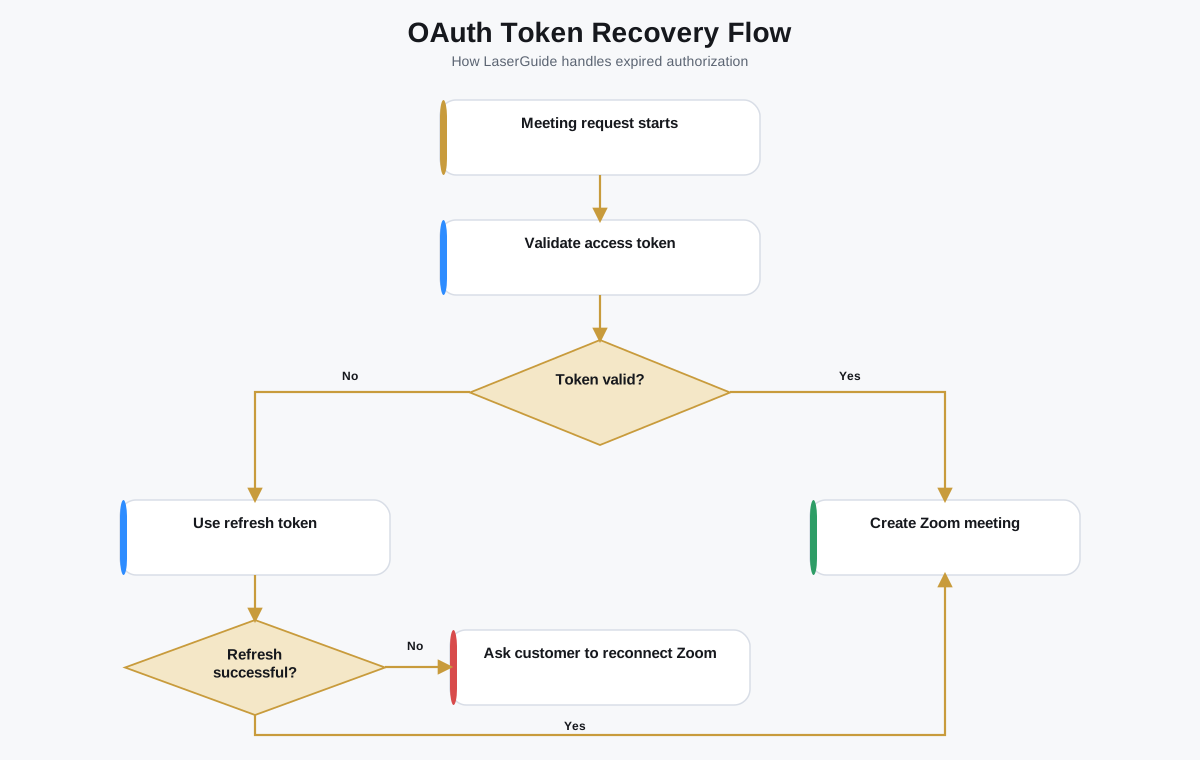
OAuth error recovery workflow for authorization failed, access denied, token expired, and reconnect actions
OAuth and authorization recovery path for expired tokens and reconnect actions.
Security

How LaserGuide secures Zoom data

LaserGuide treats Zoom connection data as sensitive integration data. The integration is built around least practical access for the meeting workflow: identify the account, create meetings, view meetings required by the workflow, update meetings when users change details, and cancel meetings when users request cancellation.

Authentication protection

  • LaserGuide uses Zoom OAuth.
  • Zoom passwords are never requested or stored.
  • Zoom handles login and authorization approval.
  • Customers can disconnect any time.

Data protection

  • OAuth credentials are encrypted before storage.
  • Communication with Zoom uses HTTPS/TLS.
  • Meeting data is stored only to support the LaserGuide workflow.
  • Access is limited to authorized workspace users and service processes.

Official reference: Zoom OAuth documentation.

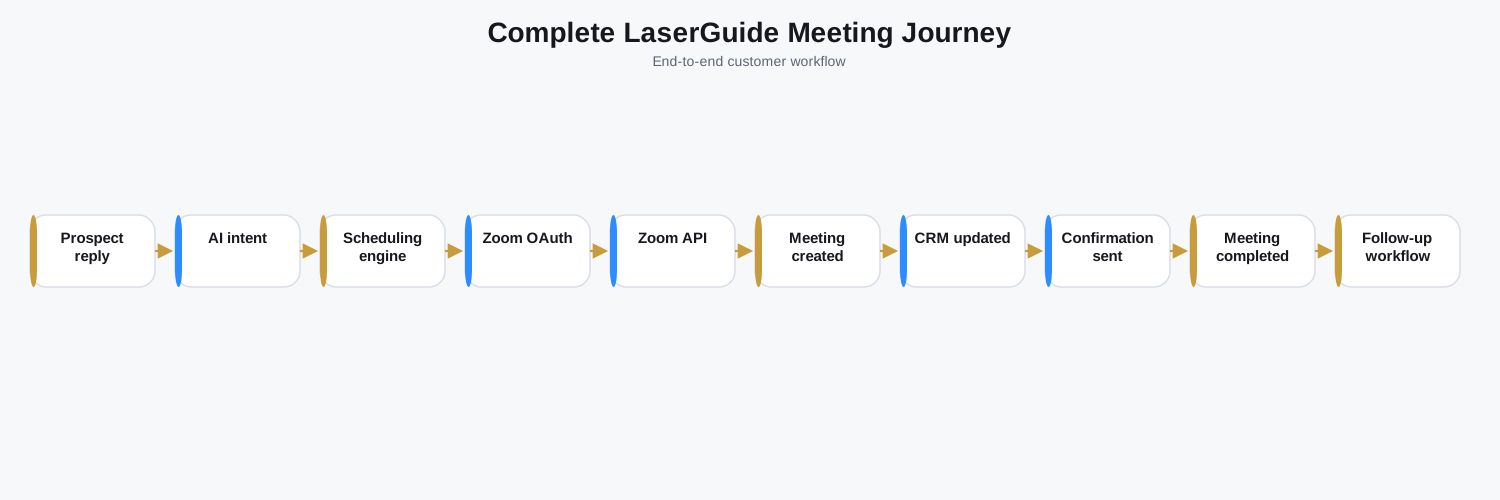
Complete LaserGuide Zoom meeting journey including authorization, meeting creation, storage, updates, and cancellation
Complete meeting journey across authorization, meeting management, storage, and customer control.
Troubleshooting

Common issues and resolutions

Most Zoom issues are caused by authorization state, account selection, permission availability, or Marketplace review limitations. Use the table below before contacting support.

IssueLikely causeResolution
Authorization failedThe account is not allowed to complete OAuth during the Marketplace review period, the Zoom session expired, or the user does not have authorization rights.Confirm the Zoom account is part of the authorized development organization during review. Otherwise retry after approval, sign in again, or ask a Zoom admin to authorize.
Access deniedThe user clicked deny, closed the Zoom authorization screen, or the Zoom account blocks app authorization.Start the connection again and approve the requested access. If the account is managed by an admin, ask the admin to permit the app.
Account already connectedThe same Zoom account is already present in the workspace.Use the existing connected account, rename it if needed, or remove the old connection before adding it again.
Token expiredThe stored Zoom authorization is no longer valid.Reconnect the Zoom account from Settings, then retry the meeting action.
Meeting not createdThe selected Zoom account is missing, disconnected, not assignable to the workflow, or Zoom rejected the request.Check the selected account, reconnect if needed, confirm meeting details, and retry.
Meeting update failedThe meeting may have been removed in Zoom, the account authorization may be invalid, or the requested change may not be accepted by Zoom.Refresh the meeting record, reconnect the account if needed, confirm the meeting still exists, and submit the update again.
Meeting deletion failedThe meeting no longer exists, the connected account cannot access it, or authorization has expired.Confirm the meeting status in Zoom. Reconnect the account and retry if the meeting still exists.
Marketplace approval limitationThe Zoom app is still awaiting Marketplace approval.Only authorized development-organization accounts can complete OAuth during review. Other customers should wait until Zoom Marketplace approval is complete.
FAQ

Frequently asked questions

Can I connect multiple Zoom accounts?
Yes. A workspace can connect multiple Zoom accounts when different teams or meeting owners need separate meeting hosts.
Can I disconnect anytime?
Yes. Remove the Zoom account from LaserGuide Settings when you no longer want LaserGuide to use it.
Does LaserGuide know my Zoom password?
No. Zoom login happens on Zoom's website, and LaserGuide never receives your password.
Can LaserGuide join meetings?
No. The integration is for meeting creation and management, not for joining meetings as a participant.
Can LaserGuide record meetings?
No. LaserGuide does not access or create Zoom recordings in the current integration.
Can I reconnect later?
Yes. You can reconnect an account if authorization expires, is revoked, or needs to be refreshed.
Why do I see Authorization Failed?
During Marketplace review, only approved development-organization accounts can complete OAuth. It can also happen when a session expires or an admin blocks authorization.
Can I change the account name?
Yes, when account editing is available in your workspace. The name is internal to LaserGuide and does not rename your Zoom account.
What happens if my Zoom subscription expires?
Zoom may limit meeting capabilities according to your Zoom plan. Update your Zoom subscription or select another connected account if meeting creation fails.
Does LaserGuide access my contacts?
No. The current Zoom integration does not access Zoom contacts.
Does LaserGuide access chat messages?
No. The current integration does not access Zoom chat messages.
Does LaserGuide access webinars?
No. Webinars are not part of the current LaserGuide Zoom workflow.
Does LaserGuide access cloud recordings?
No. Cloud recordings are not accessed by the current integration.
Who should connect the Zoom account?
Use the team or individual account that should host the meetings created from LaserGuide.
Can an admin connect a shared team account?
Yes, if the admin can sign in to that Zoom account and authorize the application.
Can I use Zoom with Google Calendar or Outlook?
Yes. Zoom can be used alongside calendar integrations when your workflow uses calendars for availability or event tracking.
Can I use Zoom with Calendly?
Yes. Calendly can support scheduling flow while Zoom provides the meeting link, depending on the workspace configuration.
What happens to historical meetings if I remove Zoom?
Historical LaserGuide records may remain for reporting and audit context. Future meeting actions will no longer use the removed account.
Will removing Zoom delete all Zoom meetings?
No. Removing the account disconnects LaserGuide. Existing Zoom meetings are not automatically deleted unless a meeting cancellation action is performed.
How do I know which account created a meeting?
Use the connected account name and the meeting metadata shown in LaserGuide to identify the account used for the workflow.
What should I do before contacting support?
Check the selected Zoom account, reconnect authorization, confirm the meeting still exists in Zoom, and review the troubleshooting table above.
Best practices

Recommended operating practices

Use one account per team

Separate accounts make ownership, reporting, and customer experience easier to manage.

Keep descriptive names

Names such as Sales Team, Customer Success, Recruiting, and Founder Demo are easier to audit than generic labels.

Reconnect after permission changes

If a Zoom admin revokes access, a password changes, or meeting actions fail, reconnect the account before retrying.

Verify timezone and meeting details

Review timezone, title, duration, and participants before sending confirmations to prospects or customers.

Official resources

Official Zoom resources

Use these Zoom resources for platform-level documentation, Marketplace information, developer references, and customer support.

Continue with

Next guides